

Surgery after pregnancy: the short answer
Some women consider surgery after pregnancy because of changes that have not improved with time, exercise or physiotherapy. The most common are loose skin and a weakened abdominal wall, and breasts that have lost volume or dropped. Surgery can help with these changes, but it tends to work well only when it is timed well and when the decision is entirely your own.
Operations combining breast and tummy surgery after children are sometimes called a “mummy makeover”. We do not offer surgery as a package. Each procedure is considered on its own merits, for your body and your concerns, after a consultation with the surgeon who would operate.
The key points are:
- wait until you have finished having children, if you can
- wait at least six months after you stop breastfeeding, so your breasts settle
- reach a weight you can maintain
- have any tummy muscle separation assessed, and try physiotherapy first
- plan for several weeks of help with lifting and childcare
Surgery for these changes is almost always cosmetic, so it is not usually available on the NHS. This guide explains the options, how procedures are combined or staged, what recovery looks like with young children, and how to think about the decision.
When is the right time?
The right time is usually when you are sure your family is complete, you have stopped breastfeeding for at least six months, your weight has been stable for several months and you have recovered physically and emotionally from the birth. In practice, that means waiting at least 6–12 months after the birth and at least six months after you stop breastfeeding, and ideally until you have finished having children.
Finishing your family
A further pregnancy can stretch the skin and muscle again, and change breast size and shape. Surgery does not usually prevent a healthy future pregnancy, but a pregnancy may undo some of the improvement. If you are unsure whether you want more children, it is usually wiser to wait.
After breastfeeding
Breasts change size for months after breastfeeding ends. Most surgeons advise waiting at least six months after you stop, and some prefer longer, so that your surgeon is planning around your settled breast size rather than one that is still changing.
A stable weight
Many women lose weight gradually in the year after birth. Reaching a weight you can maintain before surgery gives a more predictable result, and a lower BMI reduces the risk of complications. The NHS notes that a tummy tuck is not a procedure for someone who is overweight.
Physical and emotional recovery
Give yourself time to recover from the birth, including a caesarean section, and to adjust to life with a baby. Surgery needs good sleep, nutrition and support at home to go well, which can be hard to find in the early months.
Tummy muscle separation (diastasis recti): physiotherapy first
Separation of the two long muscles down the middle of the abdomen is very common in pregnancy, and in many women it improves on its own. The NHS explains that the gap is usually about two finger widths and usually returns to normal by the time your baby is eight weeks old. If the gap is still obvious at eight weeks, contact your GP, who may refer you to a physiotherapist.
Physiotherapy is the first treatment. A women’s health (pelvic health) physiotherapist can assess the gap and the strength of your deep core and pelvic floor, and give you targeted exercises. The NHS suggests starting with pelvic floor and deep stomach exercises and good posture, and avoiding sit-ups, planks and high-impact exercise early on. Many women see a real improvement over several months.
When surgery may help
If a significant gap remains after a good period of physiotherapy, often with a bulge that does not flatten, loose overlying skin or a small umbilical hernia, surgery may help. During a tummy tuck, the surgeon can stitch the separated muscles back together (muscle repair or plication) as well as removing loose skin. Your surgeon will examine you, and sometimes arrange an ultrasound scan, to assess the gap and check for a hernia.
Surgery does not replace the need for a strong core. Physiotherapy before and after surgery helps with recovery, posture and back comfort.
Which procedures can help
The right procedure depends on what has changed and what bothers you most. The table gives an overview, including iQonic starting prices where published.
- Loose skin and muscle separation across the whole abdomen: Physiotherapy, stable weight · Tummy tuck with muscle repair · £10,495
- Loose skin only below the belly button: Physiotherapy, stable weight · Mini tummy tuck · £7,750
- Loose skin plus stubborn fat on the flanks: Stable weight · Lipo-abdominoplasty · £10,250 (one area)
- Stubborn fat with good skin tone: Stable weight, exercise · Liposuction · £4,550 (one area)
- Breasts smaller and emptier, little droop: Wait for breasts to settle · Breast augmentation · £9,750
- Breasts dropped, with or without loss of volume: Wait for breasts to settle · Breast lift, with or without an implant · Breast reduction and lift £10,950
- Breasts larger and heavier than before: Wait for breasts to settle; supportive bra · Breast reduction · £10,950
- Nipples that have become inverted or enlarged: Wait for breasts to settle · Inverted nipple correction or nipple reduction · Inverted nipple £2,200 (one side); nipple reduction £1,500 (one side)
Tummy options
A full tummy tuck removes loose skin from the lower abdomen, tightens the separated muscles and repositions the belly button, leaving a scar low across the hips. If you have had a caesarean section, the old scar is usually removed within the new one. A mini tummy tuck treats loose skin below the belly button only, with a shorter scar, and suits fewer people after pregnancy because muscle separation usually extends above the belly button. Liposuction removes fat but does not tighten loose skin or repair muscles, so on its own it rarely addresses post-pregnancy changes in the abdomen.
Breast options
Pregnancy and breastfeeding often leave breasts smaller, softer and lower than before. If the main change is volume, an implant may be enough. If the nipple has dropped to or below the fold under the breast, a lift is usually needed to reshape the breast and raise the nipple, sometimes combined with an implant to restore fullness. If your breasts have become larger and heavier, a reduction removes tissue and lifts at the same time. Our guide to Mia Femtech® vs Preserve by Motiva® vs traditional augmentation explains why the less invasive implant techniques are not suitable if your breasts have dropped.
Combining or staging procedures
Breast and tummy surgery can sometimes be done in one operation, but it is not right for everyone. The decision is about your health and your circumstances, not convenience or price.
- Anaesthetics: One, but longer · Two, each shorter
- Risk: Longer operations carry a higher risk of blood clots and some other complications · Risk spread over two shorter operations
- Recovery: One recovery period, but harder: both chest and abdomen are sore, and lifting and arm use are restricted together · Two recovery periods, each easier to manage
- Time off: Usually less in total · Usually more in total
- Childcare: More help needed at once · Help needed twice, but for less intense periods
- Flexibility: Everything decided at once · You can see the result of the first stage before deciding on the second
Your surgeon will consider your age, BMI, general health, the length of each procedure and your support at home. Many surgeons will combine a breast procedure with a tummy tuck for a fit, healthy woman at a stable weight, and recommend staging where the operation would be long, where there are health risks, or where a large procedure is planned in each area.
If you do combine procedures, you will be given measures to reduce the risk of blood clots, such as stockings, early walking and sometimes blood-thinning injections, and you may need an overnight stay.
Recovery with young children
The hardest part of recovery after pregnancy-related surgery is often not the surgery itself but caring for young children while you heal. Most surgeons advise not lifting children or anything heavy for at least six weeks after breast surgery or a tummy tuck. After a tummy tuck with muscle repair, heavier lifting often waits until 8–12 weeks, and combined procedures can take longer.
What to plan for
- Help at home: you will need another adult for at least the first one to two weeks, full time, and help with lifting for several weeks after that.
- Lifting: think through every lift in your day, including cots, car seats, prams, the bath and the changing table. Toddlers can be taught to climb onto your lap while you sit.
- Nights: plan who will do night wakings in the early days, as broken sleep slows recovery.
- Driving: most people are not ready to drive for around three to four weeks after a tummy tuck, and you must be able to make an emergency stop comfortably. Check with your insurer.
- School runs and nursery: arrange lifts or help for the first few weeks.
Typical recovery
- Tummy tuck: most people return to desk work after about 3–4 weeks, and later if their job is physical, with a compression garment usually worn for about six weeks. Core exercise and heavier lifting usually wait until 8–12 weeks.
- Breast surgery: most people return to desk work in one to three weeks, depending on the procedure, and to strenuous exercise at around six weeks, wearing a supportive bra day and night at first.
- Liposuction: the NHS describes gentle exercise at around 3–4 weeks, with swelling settling over several months.
Your surgeon will give you personal guidance. iQonic provides a comprehensive aftercare programme with follow-up by your surgeon’s team. You can reach your care team 24/7 through the Adoreal app.
Future pregnancies and breastfeeding
If there is a chance you will want another baby, tell your surgeon. Pregnancy after surgery is usually possible, but it can change the result.
- After a tummy tuck: a later pregnancy can stretch the skin and the repaired muscles again. Most women can carry a pregnancy after abdominoplasty, but some choose further surgery afterwards.
- After breast augmentation: the NHS notes that implants may slightly reduce the amount of milk you produce, and many women breastfeed successfully. Pregnancy can change the breast around the implant.
- After breast reduction or lift: the NHS notes that some women are unable to breastfeed after a reduction. A lift may also affect breastfeeding. Breasts can enlarge again during pregnancy.
For these reasons, most surgeons suggest waiting until your family is complete. If you decide to have surgery sooner, your surgeon can explain how a future pregnancy might affect your particular result.
Risks to consider
All surgery carries risk, and the risks add up when procedures are combined. Your surgeon will go through the risks that apply to your plan and give you written information to take away.
General risks
- bleeding and haematoma, occasionally needing a return to theatre
- infection
- blood clots in the legs (DVT) or lungs (PE), more likely with longer operations
- reactions to the anaesthetic
- scarring, including thick, raised or stretched scars
After a tummy tuck
- seroma (a collection of fluid under the skin) that may need draining
- wound healing problems, particularly at the centre of the scar
- numbness of the lower abdomen, which may be long-lasting
- an uneven contour, or small puckers at the ends of the scar
After breast surgery
- changes in nipple or breast sensation
- asymmetry
- effects on breastfeeding
- with implants: capsular contracture, rupture, rippling and the likelihood of further surgery in your lifetime
Stopping smoking and nicotine, reaching a stable weight and attending every follow-up all reduce risk. Contact your surgeon’s team urgently if you notice increasing pain, a wound opening, fever, rapid swelling on one side, calf pain or breathlessness.
Realistic expectations and emotional wellbeing
Surgery can improve specific physical changes, such as loose skin, separated muscles or breasts that have dropped. It cannot restore your body exactly to how it was before pregnancy, and it should never feel like something you ought to do.
What surgery can and cannot change
- Stretch marks are removed only where the skin they are on is removed, usually below the belly button in a tummy tuck. Those above remain, though they may move lower.
- Every procedure leaves a permanent scar. Scars fade over 12–18 months but do not disappear.
- Results depend on keeping a stable weight.
Making the decision for yourself
Bodies change with pregnancy, and there is nothing wrong with a body that shows it. Many women live comfortably with these changes. Others find that particular changes cause physical discomfort, affect how clothes fit or stay on their mind, and decide surgery is right for them. Both are reasonable.
The decision should be yours, made without pressure from a partner, family, social media or an advert. A good consultation should feel like a chance to get honest information, not a sales conversation. After your first consultation you will have at least 14 days to reflect before you give consent, with further consultations always available, and you are free to decide not to go ahead.
If you are struggling with low mood, anxiety or how you feel about your body after having a baby, talk to your GP, midwife or health visitor. Postnatal depression is common and treatable, and it is better to feel well before making decisions about surgery. If you find yourself preoccupied with a feature that others do not notice, mention this to your surgeon too.
Cost and next steps
Surgery after pregnancy is not usually available on the NHS, because it is regarded as cosmetic. At iQonic, a tummy tuck starts from £10,495, a mini tummy tuck from £7,750, liposuction from £4,550 for one area, breast augmentation from £9,750 and breast reduction and lift from £10,950. If you are having more than one procedure, your surgeon will quote for your individual plan, whether combined or staged. Quotes are valid for three months, and information on spreading the cost is on our pricing and finance page.
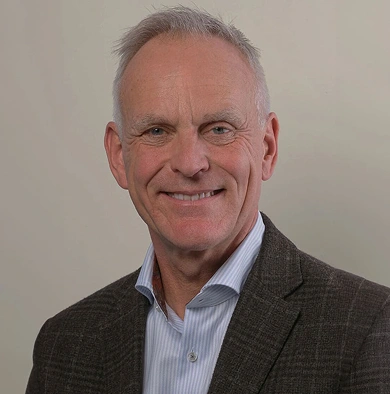
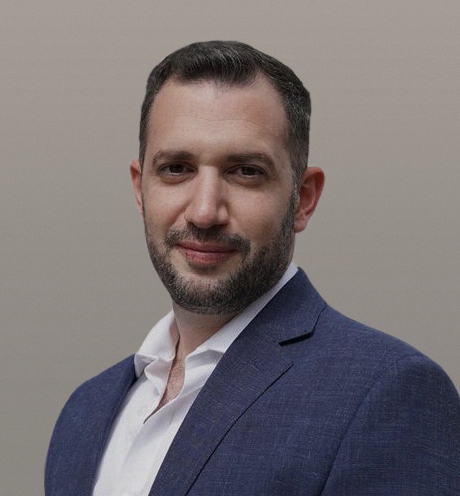
Your consultation is in person with the surgeon who would operate: Mr Adrian Richards or Dr Ali Arnaout for breast surgery, and Dr Ali Arnaout or Dr Arnaout for a tummy tuck or liposuction. Consultations take place at 15 Harley Street, London, and cost £100; if you would like to talk things through first, a virtual consultation with a patient advisor is free. Surgery takes place at partner hospitals in London. You are welcome to bring your baby to a consultation if that makes it easier.
Before you meet, it can help to note what bothers you most, any pregnancy or birth complications, whether you are still breastfeeding and whether you might want more children. You can read about each step on your journey, see examples on our before and after page, or book a consultation.
Questions people ask
How long after having a baby can I have a tummy tuck?
Most surgeons advise waiting at least 6–12 months after the birth and at least six months after you stop breastfeeding, and ideally until you have finished having children and reached a stable weight. Muscle separation should be assessed and treated with physiotherapy first. Your surgeon will confirm the right timing for you.
How long after breastfeeding should I wait for breast surgery?
Most surgeons advise waiting at least six months after you stop breastfeeding, so your breasts can settle to their final size and shape. Planning surgery on breasts that are still changing makes the result less predictable.
Can diastasis recti be fixed without surgery?
Often, yes. Many separations close by around eight weeks after birth, and a pelvic health physiotherapist can help with targeted exercises. If a significant gap remains after a good period of physiotherapy, a tummy tuck with muscle repair may be considered.
Is a tummy tuck after pregnancy available on the NHS?
Usually not. The NHS regards abdominoplasty as cosmetic surgery, so it is rarely funded. Physiotherapy for muscle separation is available on the NHS, and your GP can refer you if the gap persists.
Can I have breast and tummy surgery at the same time?
Sometimes. Combining them means one anaesthetic and one recovery period, but the operation is longer, which increases the risk of blood clots and makes recovery harder. Your surgeon will advise whether combining or staging is right for you.
How long before I can lift my baby after a tummy tuck?
Most surgeons advise not lifting children or anything heavy for at least six weeks after a tummy tuck, and heavier lifting often waits until 8–12 weeks after muscle repair. You will need help at home, especially in the first two weeks. Your surgeon will give you personal advice.
Can I get pregnant after a tummy tuck?
Yes, most women can have a healthy pregnancy after abdominoplasty. However, pregnancy can stretch the skin and repaired muscles again and change the result. For this reason, surgeons usually suggest waiting until your family is complete.
Can I breastfeed after breast surgery?
Often, but not always. The NHS notes that implants may slightly reduce milk supply, and that some women cannot breastfeed after a breast reduction. A lift may also affect breastfeeding. Discuss your plans with your surgeon.
Will a tummy tuck remove my stretch marks?
Only those on the skin that is removed, which is usually the area below the belly button. Stretch marks above this remain, although they may sit lower after surgery.
Will my C-section scar be removed during a tummy tuck?
Usually, yes. The tummy tuck scar is normally placed low, and the old caesarean scar is often removed with the excess skin. Your surgeon will explain where your new scar will sit.
How much does surgery after pregnancy cost in the UK?
It depends on which procedures you have. At iQonic, a tummy tuck starts from £10,495, a mini tummy tuck from £7,750, breast augmentation from £9,750 and breast reduction and lift from £10,950. Your surgeon will quote for your individual plan after consultation.