

What is a forehead lift?
A forehead lift, also called a brow lift, is an operation that raises the eyebrows to a higher, more natural position and softens horizontal forehead lines and frown lines. The two names describe the same procedure: “forehead lift” emphasises the lines, “brow lift” emphasises the eyebrow position.
With age, the forehead and eyebrows descend. The outer (lateral) part of the brow usually drops first, which can crowd the upper eyelid and create hooding. Many people who think they need eyelid surgery are, in part, seeing the effect of a low brow. A brow that sits low can also make a face look tired, stern or sad when you feel none of those things.
A forehead lift works by releasing the tissues that hold the brow down, lifting the forehead and brow, and securing them in the new position. Depending on the technique, some skin may be removed and the muscles that cause frown lines may be weakened. Incisions are placed in the scalp, at the hairline or in the temple so that scars are as discreet as the technique allows.
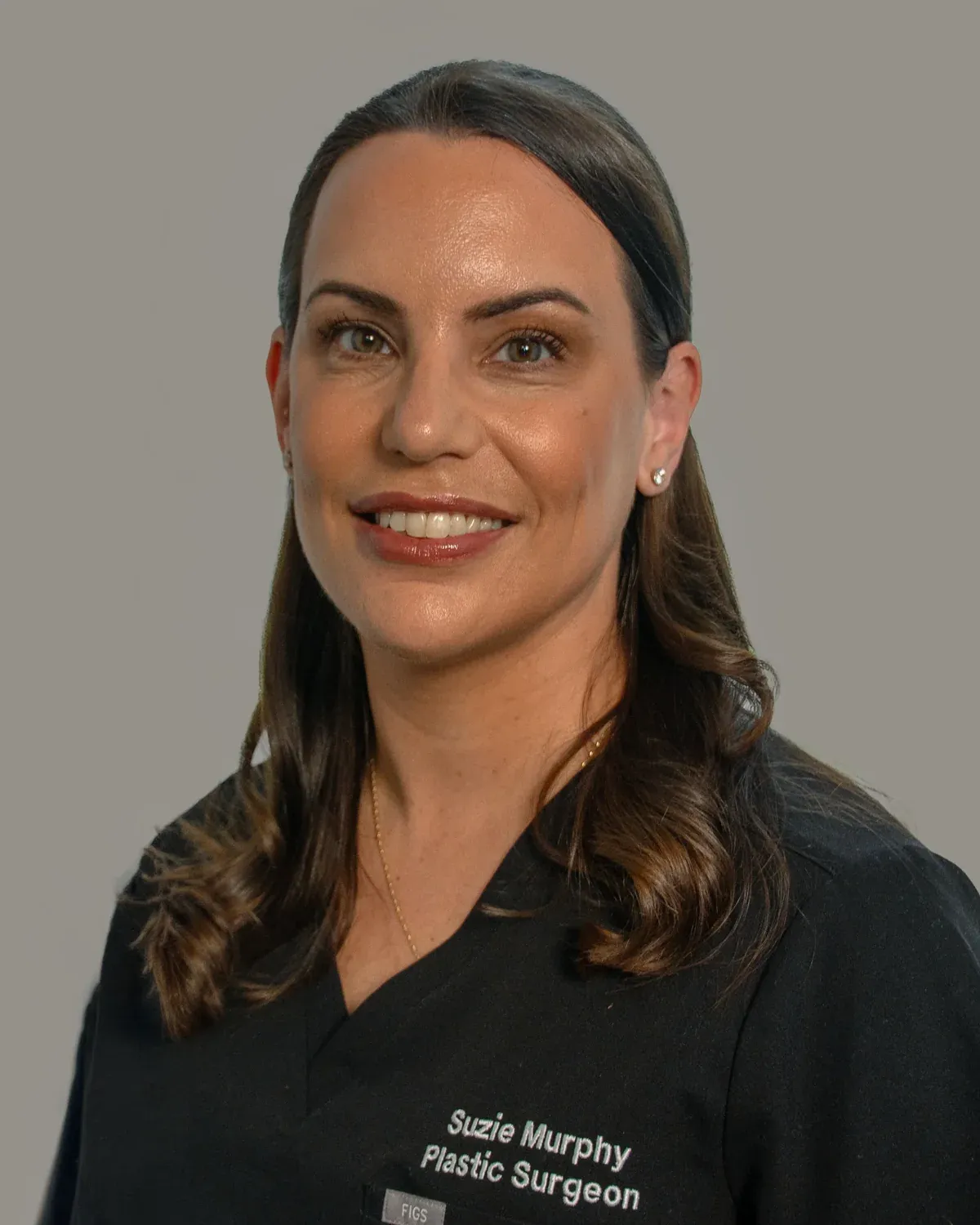
At iQonic, forehead lift surgery is performed by Miss Suzie Murphy, a consultant plastic surgeon and BAPRAS member who holds the FRCS (Plast), and whose practice covers facelift, eyelid, forehead and ear surgery. Consultations with Miss Murphy take place at 15 Harley Street, London.
Who is it suitable for?
A forehead lift suits adults whose eyebrows sit low, or have dropped over time, and who would like a more open, rested appearance around the eyes. The key test is whether lifting the brow by hand in a mirror gives the change you are hoping for.
You may be a candidate if you have:
- eyebrows that sit at or below the upper rim of the eye socket, especially at the outer end;
- hooding of the upper eyelids that is partly caused by the brow, not only by extra eyelid skin;
- deep horizontal forehead lines or frown lines between the brows;
- a brow that is noticeably lower on one side (some asymmetry is normal and cannot be fully corrected);
- good general health, no smoking (or a willingness to stop smoking and nicotine, including vapes and patches, at least 6 weeks before and after surgery), and realistic expectations.
Who may not be suitable. A brow lift is less likely to be the right choice if your brows already sit at a normal height and the hooding is due to eyelid skin alone (in which case upper eyelid surgery may be more appropriate), or if you have a very high hairline and do not want it raised further. Dry eye, previous eyelid or forehead surgery, some scalp conditions, bleeding disorders and poorly controlled medical conditions need careful assessment.
Your hairline matters. Some techniques move the hairline backwards; others keep it where it is or lower it slightly. Hair thickness, the direction you part your hair and your plans for future hairstyles all help decide which approach suits you.
Suitability is always decided at a face-to-face consultation with the surgeon who would operate. Cosmetic surgery at iQonic is for adults aged 18 and over. After your first consultation there is a reflection period of at least 14 days before you give consent, with further consultations always available, so you have time to consider the plan without pressure. You can read how the process works.
Types of forehead lift
There are several ways to lift the brow. They differ in where the incisions go, how much lift they give, what happens to the hairline and the pattern of side effects. Your surgeon will recommend a technique after examining your brow, forehead height, hairline and eyelids.
Endoscopic brow lift
Three to five short incisions (about 1–2 cm) are made behind the hairline. A thin camera (endoscope) is used to release and lift the forehead tissues, which are then fixed in place with sutures, small screws or an absorbable fixation device. Scars are hidden in the hair and no skin is removed. It suits people with a normal or slightly high hairline and a moderate brow descent. The hairline moves back a little.
Coronal brow lift
An incision runs across the top of the scalp from ear to ear, behind the hairline. It gives direct access to the whole forehead, allows skin removal and treatment of the frown muscles, and can give a strong, lasting lift. It raises the hairline, so it suits people with a low or normal hairline. Numbness of the scalp behind the incision is expected and often long-lasting.
Hairline (pretrichial) brow lift
The incision follows the front edge of the hairline, bevelled so that hair can grow through the scar. Skin is removed in front of the hairline, which lifts the brow without moving the hairline back, and can shorten a high forehead. The scar is at the hairline, so it can be visible with some hairstyles.
Temporal (lateral) brow lift
Short incisions in the hair-bearing skin of each temple lift only the outer third of the brow, where descent is usually greatest. It is a smaller operation, often done under local anaesthetic with sedation, and is frequently combined with upper eyelid surgery. It does not treat central forehead lines.
Direct or mid-forehead brow lift
Skin is removed directly above the eyebrow or within a deep forehead crease. It gives precise lift, and is sometimes used for men with receding hairlines or for brow droop after facial nerve weakness. The trade-off is a scar on the forehead or at the brow margin.
Brow lift with eyelid surgery
A low brow and excess upper eyelid skin often occur together. Treating the brow first (or at the same operation) prevents too much eyelid skin being removed, which can otherwise pull the brow down further.
Eyelid surgery (blepharoplasty)What happens during surgery
A forehead lift usually takes 1–2 hours and most patients go home the same day. It is performed under general anaesthetic, or under local anaesthetic with sedation for smaller procedures such as a temporal lift.
Before the day
At your consultations your surgeon examines your brow position at rest and when you raise your eyebrows, measures the forehead and hairline, checks eyelid function and asks about dry eye. Photographs are taken for your records. You will be asked to stop smoking and nicotine (including vapes and patches) at least 6 weeks before and after surgery, because nicotine reduces blood flow to the scalp and increases the risk of wound problems and hair loss. Some medicines and supplements that affect bleeding may need to be paused; only do this on medical advice.
On the day
- Marking. Your surgeon marks the planned brow position and incision lines with you sitting upright.
- Anaesthetic. You meet your anaesthetist. Local anaesthetic is also injected into the forehead and scalp to reduce bleeding and early discomfort.
- Access and release. Through the chosen incisions, the forehead tissues are lifted and the ligaments that tether the brow at the outer eye socket are released.
- Lift and fixation. The brow is raised to the planned height and secured. In open techniques, excess scalp or forehead skin is removed and the frown muscles may be weakened.
- Closure. Incisions are closed with stitches or clips. A light dressing or head wrap may be applied and, occasionally, a small drain.
Hair is not usually shaved, or only a very narrow strip is parted. You recover on the ward and are discharged once you are comfortable, eating and drinking, and have someone to take you home and stay with you for the first night.
Recovery, week by week
Most people are back to desk work and social activities in 10–14 days, when bruising has largely faded. Swelling and altered sensation settle more slowly, over several months. The timings below are typical; your surgeon will give you a plan for your technique.
Tips that help. Keep your head raised for the first week, avoid alcohol for a few days, protect scars from the sun for at least a year, and do not colour or chemically treat your hair until your surgeon agrees, usually around 4–6 weeks.
When to call. Contact the clinic promptly if you notice swelling that is rapidly increasing or much worse on one side, severe or worsening pain, bleeding that does not stop with gentle pressure, redness or discharge from a wound, a fever, or any change in your vision. If you have chest pain, sudden breathlessness or a painful swollen calf, call 999.
- Days 1–3
Swelling and bruising of the forehead and around the eyes are expected, often peaking on day 2–3. Sleep with your head raised on two or three pillows. Cold compresses (not ice directly on the skin) help. A tight or numb feeling in the forehead and scalp is normal. Discomfort is usually controlled with simple painkillers.
- Week 1
Dressings are removed and wounds checked. Stitches or clips are usually removed at 7–10 days. You can usually wash your hair gently after 48 hours, as advised. Avoid bending, heavy lifting and hot hair tools.
- Days 10–21
Most bruising has faded and many people return to desk work and driving (once you are off strong painkillers and can brake and turn without discomfort). Make-up can usually be worn once wounds are healed. Some swelling may shift down towards the eyes and cheeks.
- Weeks 4–6
Gradual return to exercise, starting with walking, then light gym work. Avoid contact sports and inverted positions until cleared. Itching of the scalp is common as nerves recover.
- 3 months
Most swelling has settled and the brow shape looks natural. Numbness in the scalp continues to improve. Scars are usually pink and firm at this stage.
- 6–9 months
The final result can be judged. Scars have usually softened and faded, and sensation has recovered as much as it will for most people.
Results and how long they last
A forehead lift raises the brow and softens forehead and frown lines, giving a more open look to the upper face. The aim is a brow that looks natural for you, not a surprised or fixed expression. Results are long-lasting, often for many years, but the face continues to age.
How long the lift lasts depends on the technique, the fixation method, skin quality and genetics. Open techniques that remove skin (coronal and hairline lifts) are generally considered to give a durable result. Endoscopic lifts depend on the tissues healing firmly in their new position during the first weeks, which is one reason surgeons ask you to avoid strain early on.
Frown lines caused by muscle activity may soften but not disappear, particularly if the muscles are not treated during surgery. Fine lines in the skin itself are not changed by lifting and may be better addressed with skin treatments.
Some brow asymmetry is present in almost everyone before surgery and some remains afterwards. Your surgeon will point out any asymmetry at consultation and explain what can realistically be improved.
Risks and possible complications
All surgery carries risk. Most people recover from a forehead lift without serious problems, but you should understand the possible complications before you decide. A systematic review of 82 studies found that the pattern of complications differs between techniques, and that endoscopic lifts were associated with a wider variety of complications than open approaches, although most of the evidence comes from case series (Byun et al., 2013).
- Bleeding or haematoma (a collection of blood under the skin) that may need to be drained
- Infection of the wound or scalp
- Numbness, tingling or itching of the forehead and scalp; this is expected after coronal lifts and can be long-lasting or permanent in a small area
- Hair loss (alopecia) around the incisions, usually temporary but occasionally permanent
- Visible, widened or raised scars, particularly with hairline or direct techniques
- A change in hairline position (higher after coronal or endoscopic lifts)
- Asymmetry of the brows, or a result that looks over- or under-corrected
- Weakness of forehead movement from injury to the frontal branch of the facial nerve; usually temporary, rarely permanent
- Difficulty closing the eyes fully (lagophthalmos) or dry eye, especially when combined with eyelid surgery
- Recurrence of brow descent over time, which may need further surgery
- Skin loss at wound edges, more likely in people who smoke
- Blood clots in the legs or lungs (DVT or PE), which are uncommon after day-case face surgery but possible
- Risks of anaesthesia and sedation, including reactions to medicines
In the review above, pooled reported rates included alopecia of 8.5% and altered sensation of 5.4% after hairline (subcutaneous) lifts, and altered sensation of 6.2%, asymmetry of 3.6% and alopecia of 3.0% after endoscopic lifts. Coronal lifts had lower reported rates of these problems but a 3.6% rate of unacceptable scarring. These figures come mainly from published case series, so treat them as a guide rather than a prediction for you.
How risk is reduced. Careful patient selection, choosing the technique that suits your hairline and brow, stopping smoking and nicotine at least 6 weeks before and after surgery, controlling blood pressure around the time of surgery and following aftercare advice all reduce risk. Your surgeon will explain the specific risks of your plan in writing before you consent.
For more on how iQonic approaches surgical standards, see safety and standards.
Alternatives to consider
Surgery is not the only option, and it is not the right option for everyone. Depending on what bothers you most, alternatives include:
- Upper eyelid surgery. If your brow sits at a normal height and the hooding comes from excess eyelid skin, upper blepharoplasty may be enough on its own. It is a shorter operation, often under local anaesthetic.
- Botulinum toxin injections. A prescription-only medicine injected into the frown and forehead muscles can soften dynamic lines and, placed carefully, give a small lift to the outer brow. Effects typically last 3–4 months, so treatment needs repeating. It does not remove skin or correct significant brow descent.
- Facelift. If your main concerns are the jawline, jowls and neck rather than the brow, a facelift may be more appropriate. A brow lift and facelift can be combined.
- Skin treatments. Fine surface lines respond better to skin-directed treatments than to lifting.
- No treatment. A low brow is not harmful. If it does not affect your vision or bother you, it is reasonable to leave it alone.
If hooding is heavy enough to restrict your field of vision, speak to your GP or an optometrist first: a visual field test can show whether the problem is functional rather than cosmetic.
How much does a forehead lift cost?
The price of a forehead lift at iQonic is confirmed after consultation. Your surgeon will give you a written quote after your consultation, once the technique has been agreed.
What changes the price:
- the technique (a temporal lift under sedation is usually less than an endoscopic or coronal lift under general anaesthetic);
- whether it is combined with upper eyelid surgery, a facelift or other procedures;
- the type of anaesthetic and length of theatre time;
- the hospital and whether an overnight stay is needed.
What a quote should include: the surgeon’s fee, anaesthetist’s fee, hospital and theatre fees, dressings and medicines to take home, and your post-operative reviews. Ask what is not included, for example further surgery if it were needed. iQonic quotes are valid for three months. A deposit becomes non-refundable only after the 14-day reflection period.
Finance is available to spread the cost; see pricing and finance. When you are ready, you can book a consultation in London.
Your surgeon
Your consultation is with the consultant who would operate. Check any surgeon on the GMC register.
What happens next
Consultation
Start with a free virtual consultation with a patient advisor if you like, then meet your surgeon at 15 Harley Street (£100) for a 45-minute consultation: an examination, options, risks, and a written plan and quote valid for three months. You are welcome to bring a partner, friend or family member.
At least 14 days to reflect
Take time to read, ask questions and decide. We never shorten it.
Consent, when you are ready
If you go ahead, you confirm the plan and give consent with your operating surgeon. Further consultations are always available before you decide.
Surgery and aftercare
At a CQC-registered hospital, with planned follow-up reviews, then free yearly check-ups and a 10-year health check. Our nurse is available evenings and weekends by call or text. Your journey in full
Questions people ask
What is the difference between a forehead lift and a brow lift?
They are two names for the same operation. It raises the eyebrows to a higher position and softens forehead and frown lines. “Brow lift” is sometimes used for techniques that only lift the outer brow, such as a temporal lift.
How long does a forehead lift last?
Results are long-lasting, often for many years, though the face continues to age. Durability depends on the technique, how the brow is fixed, and your skin and genetics. Some people choose a further procedure many years later.
Will I have visible scars after a brow lift?
All techniques leave scars. Endoscopic and coronal scars are hidden in the hair; temporal scars are in the hair of the temple; hairline scars sit at the front edge of the hair and can be visible with some styles. Direct brow lift scars are on the forehead or at the brow edge.
How long is recovery from a forehead lift?
Most people return to desk work and social activities in 10–14 days, when bruising has faded. Exercise usually resumes at 4–6 weeks. Swelling and scalp numbness take several months to settle, and the final result is judged at around 6–9 months.
Is a brow lift done under general anaesthetic?
It can be done under general anaesthetic, or under local anaesthetic with sedation for smaller procedures such as a temporal lift. Your surgeon and anaesthetist will advise on the option that suits your plan and health.
Does a brow lift change your hairline?
It can. Coronal and endoscopic lifts move the hairline back slightly, while a hairline (pretrichial) lift keeps it in place or lowers it. If you have a high forehead, tell your surgeon at consultation so the technique can be chosen accordingly.
Should I have a brow lift or eyelid surgery?
It depends on whether your hooding comes from a low brow, excess eyelid skin or both. If you lift your brows in the mirror and the hooding largely disappears, the brow is a major factor. Many people benefit from both, and your surgeon will assess this at consultation.
Can botulinum toxin lift my eyebrows instead of surgery?
Toxin injections can soften forehead and frown lines and give a small lift to the outer brow, but effects last about 3–4 months and need repeating. They do not remove skin or correct significant brow descent. They are a reasonable option if you prefer to avoid surgery.
Will I lose sensation in my forehead?
Temporary numbness of the forehead and scalp is common, especially after a coronal lift, and usually improves over months as nerves recover. Itching is a normal sign of recovery. In some people a small area stays numb permanently.
How much does a brow lift cost in London?
The cost depends on the technique, whether other procedures are combined and the hospital. iQonic gives you a written quote after consultation, valid for three months. Finance options are explained on our pricing and finance page.
Further reading
References and further reading
- BAPRAS — Face and brow lift
- Aesthetic Surgery Journal — Byun S, et al. Complications of browlift techniques: a systematic review (2013;33(2):189–200)
- NHS — Eyelid surgery
- NHS — Before you have a cosmetic procedure
- Royal College of Surgeons of England — Your consultation with the surgeon
- GMC — Guidance for doctors who offer cosmetic interventions